

What Buyers Need to Know Before Choosing a High C Rate Lithium Battery Manufacturer?
For buyers in industries such as AGVs, automotive starting, power tools, UPS systems, drones, and industrial equipment, working with a trusted lithium battery manufacturer is essential because battery performance directly affects the reliability of the end product. That is why many professional buyers focus not only on battery specifications, but also on the supplier’s engineering strength, quality control system, certifications, and customization capability.
A high rate discharge battery is designed to deliver a large amount of current in a short period of time. This feature is especially important in applications that need instant power, fast energy release, or rapid charge and discharge performance. To understand why these batteries matter so much, buyers first need to understand the meaning of battery C-rate and how it affects battery behavior in practical use.
What Is a High Rate Discharge Battery?
A high rate discharge battery is a lithium battery capable of delivering high current output relative to its rated capacity. In battery terminology, this is commonly described by the C-rate. The C-rate measures how quickly a battery can be charged or discharged compared with its nominal capacity. For example, a 1C discharge rate means the battery can discharge its full rated capacity in one hour. A 50Ah battery discharged at 1C provides 50A of current, while a 20Ah battery at 1C provides 20A, but both would theoretically finish discharging in one hour.
As the C-rate increases, the battery can release power more quickly. A battery designed for high rate discharge may support 2C, 5C, 10C, or even much higher discharge rates depending on the cell chemistry, internal resistance, thermal design, and structural optimization. Some manufacturer provide 26650 cylindrical lithium cells which can support discharge rates from 1C up to 50C, making them suitable for high-power demand scenarios.
Here it is one of best selling high C rate battery cell below.
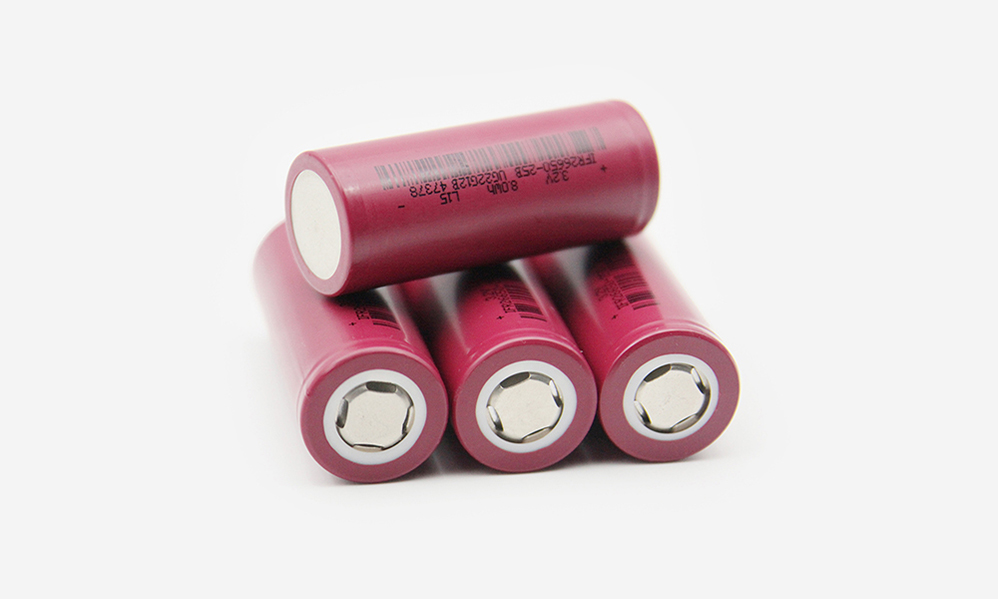

| Item | Parameters |
| Product Model | IFR26650-25B |
| Material System | Lithium Iron Phosphate (LiFePO4) |
| Diameter | 26.3±0.2mm |
| Height | 65.3±0.3mm |
| Nominal Capacity (Ah) | 2.5Ah |
| Internal Resistance (mΩ) | ≤6mΩ |
| Nominal Voltage (V) | 3.2V |
| Standard Discharge Current | 1C |
| Max. Continuous Discharge Current | 20C |
| Pulse Discharge Current | / |
| Standard Charging Current | 1C |
| Max. Continuous Charging Current | 5C |
| Charging Operating Temperature | 0℃ ~ 60℃ |
| Discharge Operating Temperature | -20℃ ~ 60℃ |
| Cycle Life (times) | ≥2000@5C |
| Weight | 83±2g |
| Energy Density | 96Wh/Kg |
Why C-Rate Matters to Battery Buyers
For battery buyers, the C-rate is not just a technical number. It is a key performance indicator that influences power delivery, charging speed, system efficiency, application fit, and product lifespan.
First, the C-rate is closely related to how fast a battery can store or release energy. A 10kWh battery with a 0.5C rate would need about two hours to fully discharge or charge at its rated level, while a 1C battery could do the same in one hour. That difference becomes very important in equipment that must respond quickly or return to service with minimal downtime.
Second, high discharge rates help equipment deliver strong peak power when needed. This is critical in devices such as power tools, jump starters, starting batteries, drones, and AGVs. These products often require sudden bursts of current rather than slow and steady energy release.
Third, buyers should remember that higher C-rates can also create more heat. Excessive heat affects safety, battery longevity, and overall system stability. Continuous operation under high C-rate conditions may shorten the battery’s cycle life if the cell design and thermal management are not properly engineered. That is why it is important to choose a manufacturer that understands the balance between high-power output and long-term battery health.
Typical Applications of High Rate Discharge Batteries
High rate discharge batteries are widely used in applications where strong instantaneous current or rapid energy delivery is required.
In AGVs, batteries need to support strong discharge during operation and fast recharging when power runs low. This makes C-rate performance highly important for productivity and uptime. In electric vehicles, higher discharge and charge capability improves usability and power response. In drones, high C-rate batteries provide the rapid energy release needed to drive propellers efficiently. In emergency jump starters, the battery must deliver a very large current instantly to start a vehicle. The same applies to power tools, ships, cars, and motorcycles, all of which depend on strong current output during demanding moments.
The advantages of 26650 cylindrical cells make them especially attractive for these markets. Compared with smaller 18650 cells, 26650 cells typically offer higher single-cell capacity, longer runtime, stronger discharge capability, and simplified pack design. They are often used in energy storage, UPS systems, power tools, solar street lights, emergency power systems, and outdoor equipment.
Why 26650 Cells Are a Strong Choice for High-Power Battery Packs
For buyers searching for a dependable high rate discharge battery solution, 26650 cylindrical cells deserve close attention. Their larger size, standardized structure, and stronger output characteristics make them highly practical for industrial and commercial battery pack development.
One clear advantage is higher capacity. A typical 26650 cell may range from 2000mAh to 5000mAh, providing longer runtime than many 18650 alternatives. This allows pack designers to reduce the number of cells in certain configurations while maintaining strong power output.
Another major benefit is high discharge capability. Low internal resistance helps maintain stable discharge performance even under heavy load. This is one reason 26650 cells are commonly selected for high-power equipment and fast-response systems.
These cells also offer good structural safety. The cylindrical format supports uniform stress distribution and resists swelling better than some other battery structures. Additional protective features such as CID and PTC can further improve safety and thermal stability.
For demanding projects, wide temperature adaptability is another valuable advantage. Custom versions can be optimized for low-temperature discharge down to -40°C and stable operation above 60°C, which is important for outdoor, industrial, military, and cold-chain applications.
Finally, buyers care about cost. Because 26650 cells offer higher capacity per cell and can simplify pack assembly, they can help reduce overall system cost while maintaining strong performance.
How to Choose a Reliable High Rate Discharge Battery Manufacturer
Choosing the right battery manufacturer is just as important as choosing the right battery chemistry or format. Many suppliers can offer a datasheet, but serious buyers need more than numbers on paper. They need a partner that can consistently turn performance promises into stable mass production.
A reliable manufacturer should have strong R&D capability, because high rate battery development requires expertise in cell design, BMS integration, thermal control, material optimization, and application matching. Engineering experience matters especially when the battery must be customized for unique discharge demands, low temperatures, compact installation spaces, or strict safety standards.
Quality control is equally important. In high rate discharge applications, even small inconsistencies can lead to unstable performance, overheating, reduced life, or safety risks. Buyers should evaluate whether the supplier has automated production, online inspection systems, traceability processes, and clear quality standards.
Customization ability also matters. Many battery buyers do not need an off-the-shelf product. They need a tailored solution that fits their voltage, capacity, discharge current, temperature range, enclosure design, communication protocol, and BMS requirements. A manufacturer that offers both cell production and pack assembly can usually provide better integration, better traceability, and better control over final product quality.
Why Buyers Choose Our Company for High Rate Lithium Battery Solutions
Our company specializes in the research, development, and production of 26650 cylindrical cells and lithium battery packs, with a clear focus on delivering high-performance, reliable, and safe energy solutions for customers worldwide. We maintain a leading position in low-temperature cells, high-rate cells, low-temperature battery packs, and high-power battery packs, serving industries such as UPS systems, automotive and motorcycle starting power, AGVs, medical equipment, street lighting, military equipment, and cold chain logistics.
For buyers seeking a dependable manufacturing partner, our strength begins with innovation. We are supported by a strong R&D team of 75 experienced engineers, with 61 patents granted and 40 more under review. This technical foundation allows us to develop both cells and BMS independently and customize them to meet specific customer requirements.
Quality is built into every stage of production. Our strict quality control system combines fully automated production with online quality inspection, helping maintain a defect rate below 0.01%. Every batch of cells is assigned a historical production file number, making full quality tracking and traceability possible. Our factory has obtained IATF16949, ISO9001, ISO14001, and ISO45001 certifications, reinforcing our manufacturing reliability.
In terms of performance, our batteries are designed for demanding applications. They feature compact size, high power, and support for fast charge and discharge. Through advanced nano-coating technology and optimized electrolytes, our products can achieve more than 4,000 cycles with a capacity retention rate of at least 80%, helping customers reduce long-term operating costs. With stable performance across a wide temperature range of -40°C to 60°C, our batteries are built for extreme conditions. They are also certified by UL, IEC, CE, ROHS, REACH, GB, CCC, and UN38.3, meeting international standards for quality and safety.
As a direct manufacturer, we offer buyers two important advantages: competitive pricing and deep technical support. We provide one-stop service from cell production to customized BMS development and pack assembly, giving customers a more efficient supply chain and more consistent battery solution.
What Buyers Should Ask Before Placing an Order
Before choosing a supplier for high rate discharge batteries, buyers should ask practical questions that reveal whether the manufacturer can truly support their project.
Ask what continuous and peak discharge rates the battery can support in real operating conditions. Ask whether the supplier has experience in your target application, whether that is AGV, UPS, jump starting, or power tools. Ask about cycle life under high-rate use, thermal performance, low-temperature behavior, certifications, traceability, and customization range. It is also wise to ask whether the supplier manufactures the cells themselves or only assembles packs from third-party cells.
These questions help separate a real manufacturing partner from a simple trading source.