

Wide Temperature Battery: Features, Benefits, and Industrial Applications
In many industries, battery performance is not just about capacity or runtime. It is about whether the power source can keep working when the environment becomes too cold, too hot, or highly unstable. That is where the wide temperature battery stands out.
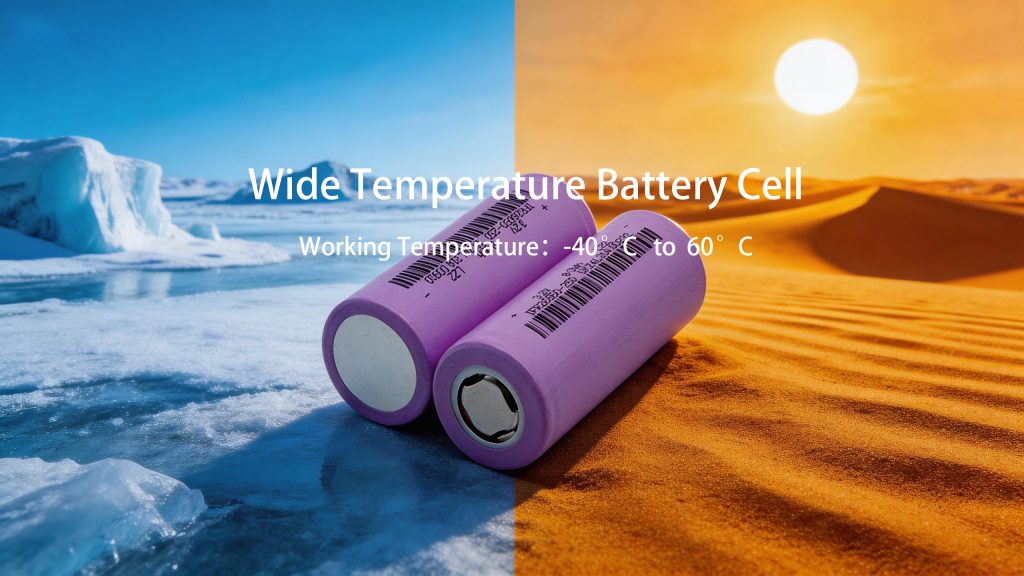
A wide temperature battery is designed to operate reliably across a broader temperature range than conventional lithium batteries. In practical terms, that often means stable performance from -40°C to 60°C, allowing equipment to function in freezing outdoor conditions, high-heat industrial settings, and applications where ordinary batteries would suffer rapid performance loss or safety risks.
This matters more than ever today. From smart security and telecom backup systems to cold chain logistics, AGVs, military equipment, and off-grid outdoor devices, modern systems depend on stable, predictable power. A battery that fails in winter, overheats in summer, or cannot safely charge below freezing can compromise the entire application.
This article explains what a wide temperature battery is, how it works, what features define it, and why it is becoming an essential solution for demanding environments.

What Is a Wide Temperature Battery?
A wide temperature battery is a lithium battery engineered to maintain safe and stable charging and discharging performance across extreme low and high temperatures. Compared with standard lithium-ion batteries, it uses optimized materials, electrolyte systems, separators, and structural design to support operation in harsher environmental conditions.
Conventional lithium batteries perform well within normal ambient temperatures, but their limitations become clear when the temperature moves too far in either direction. In low temperatures, ion movement slows down, internal resistance rises, and voltage drops more quickly. In high temperatures, chemical side reactions accelerate, which may shorten cycle life and increase safety concerns.
Wide temperature batteries are built to address those weaknesses. Instead of relying on standard chemistry alone, they are designed at the cell level to preserve conductivity in cold conditions and improve thermal stability in hot conditions. Some advanced designs can even support sub-zero charging, which is a major advantage for outdoor and mission-critical applications.
In simple terms, a wide temperature battery is not just a battery that survives harsh weather. It is a battery designed to deliver usable, dependable power where standard batteries struggle.
Why Standard Batteries Fail in Extreme Temperatures
To understand the value of wide temperature batteries, it helps to look at what happens to ordinary lithium batteries in extreme environments.
Low-temperature problems
Cold temperatures reduce the speed of electrochemical reactions inside the cell. As a result:
- Internal resistance increases
- Available capacity drops
- Voltage sag becomes more severe under load
- Charging becomes risky below 0°C
One of the biggest dangers is lithium plating during low-temperature charging. When lithium ions cannot move and intercalate into the anode properly, metallic lithium may deposit on the surface. Over time, this can lead to dendrite formation, internal short circuits, permanent damage, or serious safety issues.
High-temperature problems
At elevated temperatures, the challenge changes. Heat accelerates parasitic reactions and material degradation inside the battery. This can lead to:
- Faster aging and capacity fade
- Reduced cycle life
- Electrolyte decomposition
- Greater thermal stress on internal components
- Higher safety risk under abusive conditions
For equipment used in deserts, industrial plants, outdoor enclosures, vehicles, or remote installations, these problems make standard battery designs unreliable over the long term.
That is why wide temperature battery technology is increasingly important. It is not simply about broader specifications on paper. It is about preserving real-world performance, reliability, and safety.
Key Features of a Wide Temperature Battery
When buyers search for the term wide temperature battery, they are usually looking for a few specific capabilities. The following features define a true wide temperature solution.
1. Broad Operating Temperature Range
The most obvious feature is the ability to work across a much wider range of temperatures than standard batteries. A well-designed wide temperature lithium battery may support operation from -40°C to 60°C, depending on cell chemistry and pack design.
This broader range gives system designers more freedom. Equipment can be deployed outdoors, in unheated spaces, inside industrial enclosures, or in environments with large day-night temperature swings without constant concern about power failure.
2. Stable Low-Temperature Discharge
Many applications need dependable discharge in freezing conditions even more than they need low-temperature charging. A battery may not be recharged often, but when the system needs to start or run, discharge performance must remain stable.
Wide temperature batteries are engineered to reduce voltage drop and preserve output under cold conditions. This makes them suitable for:
- Outdoor UPS systems
- Remote monitoring equipment
- Vehicle starting power
- Security and surveillance devices
- Telecom backup installations
- Scientific and defense equipment in cold regions
3. Safe Charging Below Freezing
One of the most valuable features in advanced wide temperature battery designs is the ability to charge below 0°C. Not every wide temperature battery supports the same charging window, but premium products may allow controlled charging at temperatures as low as -20°C.
This is a major improvement over standard lithium batteries, where sub-zero charging is often prohibited because of lithium plating risk. Achieving safe low-temperature charging requires more than adding a heater. It usually depends on carefully matched cell chemistry, low-viscosity electrolyte systems, electrode optimization, and intelligent charging control.
4. Enhanced High-Temperature Resistance
Wide temperature performance is not only about cold climates. A battery also needs to withstand hot environments without rapid degradation or unstable behavior.
Improved separator technologies, optimized electrolyte formulations, and better thermal design help wide temperature batteries remain more stable in elevated temperatures. For outdoor electronics exposed to direct sunlight, industrial machinery, automotive electronics, and defense systems, this high-temperature resilience is essential.
5. Strong Safety Performance
In harsh environments, safety margins matter. Temperature extremes place stress on every part of the battery system, including electrodes, separators, electrolyte, current collectors, and pack electronics.
A true wide temperature battery is designed with safety in mind from the cell stage onward. That often includes:
- Improved material stability
- Better separator performance
- More precise battery management
- Controlled charging logic
- Pressure relief and protective structures
- Rigorous high- and low-temperature testing
For critical applications, safety is not a marketing extra. It is one of the core reasons customers choose wide temperature battery solutions.
How Wide Temperature Battery Technology Works
The phrase wide temperature battery sounds simple, but the engineering behind it is highly specialized. The performance improvements come from multiple design areas working together.
Advanced electrolyte formulation
At low temperatures, electrolyte viscosity increases and ionic conductivity falls. Wide temperature batteries use specially designed low-viscosity electrolytes and additives to help ions move more efficiently in the cold. This supports better low-temperature discharge and reduces the risk associated with charging in sub-zero conditions.
Optimized electrode materials
Battery performance in harsh temperatures also depends on the anode and cathode. Surface modifications, conductive networks, and material tuning can help lower charge transfer resistance and improve lithium-ion movement at low temperatures.
Separator enhancement
The separator plays a critical safety role, especially at elevated temperatures. Ceramic-coated or other heat-resistant separator technologies can improve thermal stability, reduce shrinkage risk, and support safer operation under demanding thermal conditions.
Battery management and control
At the pack level, the BMS is equally important. Temperature sensing, current control, charge cutoffs, and balancing logic all help maintain safe performance across varying environmental conditions. In advanced custom battery packs, the BMS can be developed specifically for the target application.
Structural and pack-level design
Environmental performance is also influenced by pack architecture, thermal paths, protection level, enclosure design, and integration with the device. That is why high-performing wide temperature battery systems are usually the result of complete engineering, not a single material improvement.
Main Benefits of Choosing a Wide Temperature Battery
For buyers evaluating solutions, the value of a wide temperature battery goes beyond temperature range alone. The real benefits show up in performance, reliability, maintenance, and total lifecycle cost.
Greater system reliability
The first and most important benefit is consistent operation. In outdoor or industrial deployments, temperature fluctuations can be a major source of unexpected failure. A battery designed for extreme conditions reduces that risk and improves uptime.
Better performance in critical moments
Many systems only reveal battery weakness when demand spikes. This may happen during cold starts, backup power events, remote transmission bursts, or emergency operation. Wide temperature batteries are better suited to handle those moments without severe voltage collapse.
Reduced downtime and maintenance
When batteries fail prematurely in harsh conditions, the cost is not limited to replacement. Maintenance visits, equipment downtime, service interruptions, and field labor can easily exceed the battery cost itself. A more durable battery solution helps reduce these hidden operational expenses.
Longer service life in demanding conditions
A properly engineered wide temperature battery can offer better long-term durability under environmental stress than a conventional battery used outside its comfort zone. That translates into fewer replacements and more stable asset planning.
Expanded deployment possibilities
Wide temperature batteries allow equipment manufacturers and system integrators to target more demanding markets. Products can be used in cold-chain logistics, remote infrastructure, military deployments, smart outdoor devices, and industrial systems that experience wide seasonal or daily temperature changes.
Typical Applications of Wide Temperature Batteries
The market for wide temperature batteries continues to grow because more industries now require dependable power in difficult environments. Common application areas include:
UPS and backup power systems
Outdoor and industrial UPS systems often face ambient temperatures far outside office or indoor conditions. A wide temperature battery supports reliable backup power where standard batteries may degrade quickly.
Automotive and motorcycle starting power
Starting systems require strong power delivery, often in cold conditions. Wide temperature batteries can help ensure dependable start-up performance while reducing the limitations of conventional batteries in winter.
AGVs and industrial automation
Automated guided vehicles and industrial equipment may operate in warehouses, cold storage facilities, factories, or logistics centers with variable thermal conditions. Stable battery output supports productivity and system continuity.
Medical equipment
Portable and mobile medical systems need power they can trust. In applications involving transport, field operation, or temperature-sensitive environments, battery reliability becomes essential.
Street lighting and outdoor infrastructure
Outdoor lighting, traffic equipment, solar-integrated systems, and remote control units are continuously exposed to environmental extremes. Wide temperature battery designs help maintain stable operation across seasons.
Military and defense equipment
Defense applications often involve demanding climates, rugged use conditions, and zero tolerance for failure. Wide temperature batteries are especially relevant for communications, telemetry, portable systems, and mission-specific power packs.
Cold chain logistics
Cold-chain vehicles, monitoring devices, and storage systems require batteries that can keep operating in low-temperature environments. This is one of the clearest cases where wide temperature performance creates direct business value.
Telecom and remote communications
Cell towers, remote transmission nodes, and communication backup systems may be installed in deserts, mountains, offshore areas, or cold zones. These installations need stable, low-maintenance power solutions capable of handling extreme weather.
What to Look for When Choosing a Wide Temperature Battery Supplier
Not every battery marketed for extreme environments delivers the same level of performance. Buyers should look beyond general claims and evaluate the supplier’s true engineering and manufacturing capability.
Important factors include:
- Verified operating, charging, and discharging temperature range
- Real cycle life under relevant test conditions
- Low-temperature charging capability
- High-rate discharge performance if needed
- Safety testing and international certifications
- Production traceability and quality control
- Industry-specific project support
A capable supplier should be able to explain not only the battery specifications, but also the technical logic behind them.
Why Manufacturing Strength Matters
For wide temperature batteries, real performance depends heavily on manufacturing consistency. Materials alone are not enough. Process control, quality inspection, pack integration, and traceability all affect whether a battery performs reliably in the field.
This is where working with an experienced direct manufacturer can make a major difference.
Our company specializes in the research, development, and production of 26650 cylindrical cells and lithium battery packs, focusing on high-performance, reliable, and safe energy solutions for global customers. We maintain strong expertise in low-temperature cells, high-rate cells, low-temperature battery packs, and high-power battery packs, with products widely used in UPS systems, automotive and motorcycle starting power, AGVs, medical equipment, street lighting, military equipment, and cold chain logistics.
Our technical strength is supported by a dedicated R&D team of 75 experienced engineers, with 61 granted patents and 40 more under review. We combine automated production with online quality inspection and maintain a defect rate below 0.01%, helping customers achieve the consistency required for demanding battery applications.
We also provide one-stop services, from cell production to customized BMS development and pack assembly, enabling full-process quality control and traceability. Our manufacturing system is supported by IATF16949, ISO9001, ISO14001, and ISO45001 certifications, while each batch of cells is assigned a historical production file number for long-term quality tracking.
From a product perspective, both our cells and BMS are independently developed and can be customized based on application requirements. Our batteries are designed for compact size, high power, fast charge and discharge, and stable performance across a wide temperature range of -40°C to 60°C. Through advanced nano-coating technology and optimized electrolytes, our products can achieve over 4,000 cycles with capacity retention of at least 80%, helping reduce long-term ownership cost for customers operating in demanding environments.
Certified to standards including UL, IEC, CE, ROHS, REACH, GB, CCC, and UN38.3, our products are built for international markets where quality, safety, and reliability matter.
Wide Temperature Battery vs Standard Lithium Battery
For many buyers, the choice comes down to whether the extra performance is worth it. In harsh or variable environments, the answer is often yes.
A standard lithium battery may be acceptable for indoor or climate-controlled applications. But when equipment is exposed to winter cold, summer heat, remote operation, or strict uptime requirements, wide temperature batteries offer a more suitable solution.
The difference is not simply broader specs. It is the ability to reduce operational risk. A battery that powers through environmental extremes can protect equipment uptime, reduce field failures, improve customer satisfaction, and lower maintenance costs.